Flowers Herbs Clipart Botanical Garden: Romantic Botanical Illustrations
There’s a certain magic in the way a hand-drawn lavender sprig or a delicate peony can transform a simple design into something that feels alive, nostalgic, and deeply personal. If your creative work leans into the soft, the romantic, or the pastoral, finding the right visual assets isn’t just about decoration—it’s about building an atmosphere. This is where a thoughtfully curated collection of botanical illustrations becomes an indispensable part of your design toolkit, offering a consistent and evocative visual language that speaks directly to a specific aesthetic.
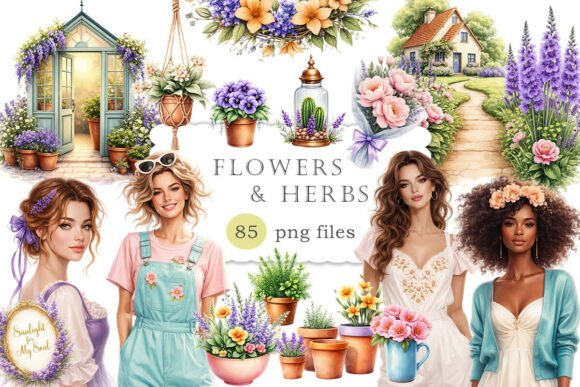
The Flowers Herbs Clipart Botanical Garden set is a prime example of such a resource. It’s not just a random assortment of floral graphics; it’s a cohesive world built around a romantic botanical garden theme. The collection features 85 high-resolution PNG illustrations, each with a transparent background, ready to be layered into your work. The subjects range from charming female characters tending to their gardens and lush floral bouquets to specific herbs like lavender, potted plants, hanging planters, and even architectural elements like a cozy greenhouse and a garden house. The entire palette is a study in soft pastels, creating a unified look that feels gentle, feminine, and timeless.
Capturing a Mood: The Cottagecore and Botanical Aesthetic
What makes this particular set of botanical garden clipart so visually appealing is its ability to tell a story. Each element contributes to a larger narrative of springtime blooms, quiet comfort, and a connection to nature. This isn’t generic stock art; it’s a curated mood board in illustration form. The style sits perfectly at the intersection of several popular and enduring design trends: the rustic simplicity of cottagecore, the elegant detail of traditional botanical illustration, the textured, vintage feel of shabby chic, and the soft, dreamy quality of a pastel aesthetic.
For a designer or creative entrepreneur, this cohesion is a major advantage. Instead of spending hours sourcing and trying to color-match disparate elements, you have a built-in system. The consistent line work, color palette, and thematic focus ensure that any combination of elements from the set will look harmonious together. This visual consistency is crucial for building a recognizable brand identity. Whether you’re a florist, a wedding planner, a blogger focusing on slow living, or a small business owner creating a line of artisanal goods, these illustrations provide a ready-made visual foundation that feels professional and deeply considered.
Practical Applications: From Digital Screens to Tangible Goods
The true value of a design asset lies in its versatility. The high resolution (300 dpi) and generous sizing (up to 4000 x 6000 pixels) of these files make them suitable for a wide range of projects, both digital and print. Let’s explore some concrete ways you can integrate these botanical illustrations into your workflow.
For Digital & Branding Projects:
- Social Media Content: Create a cohesive Instagram grid or Pinterest aesthetic. Use individual elements like a single herb sprig or a small bouquet as profile picture accents, post backgrounds, or story stickers. The larger scene illustrations are perfect for eye-catching banners or promotional graphics.
- Website & Blog Design: Enhance your site’s visual appeal without slowing it down. Use the illustrations as decorative borders, featured image backgrounds, or custom bullet points. They are perfect for a blog focused on gardening, recipes, wellness, or lifestyle topics, adding a layer of personality that stock photos can’t match.
- Digital Products & Templates: If you sell planners, journals, or Canva templates, these clipart sets are invaluable. Incorporate them into the design of printable inserts, sticker sheets for digital planners, or decorative elements for ebook covers and social media templates.
- Marketing Assets: Design beautiful email headers, newsletter graphics, and promotional flyers that stand out. The romantic aesthetic is particularly effective for marketing campaigns around spring, Mother’s Day, weddings, or any product that wants to evoke a sense of natural beauty and care.
For Print & Physical Products:
- Packaging & Label Design: This is where the set truly shines for product-based businesses. Design stunning packaging for handmade soaps, candles, teas, or baked goods. Create elegant product labels, hang tags, and thank-you cards that make unboxing an experience. The botanical garden theme communicates quality, natural ingredients, and artisanal craftsmanship.
- Stationery & Invitations: The applications are endless for stationers. Design unique wedding suites, save-the-dates, and place cards with a soft, romantic flair. Create beautiful greeting cards, postcards, and notepads. The illustrations are also perfect for creating decorative washi tape and sticker designs.
- Merchandise & POD: For print-on-demand businesses, the high-resolution files are ideal for products like mugs, tote bags, t-shirts, and throw pillows. A delicate floral pattern or a central character illustration can become the hero design for a product line that appeals to lovers of feminine and botanical aesthetics.
- Interior Decor: Create a series of printable wall art or frameable posters. A collection of different herb illustrations or a panoramic garden scene can be sold as digital downloads or printed and sold as physical art prints.
Working with the Assets: A Practical Guide
Integrating clipart into a professional design project requires more than just dragging and dropping. To get the most out of a set like this, consider these practical tips.
1. Establish Your Visual Hierarchy: Before you start, decide on the role these illustrations will play. Are they the main focus of a logo, or are they supporting elements in a busy website layout? Use larger, more detailed scenes for hero images and smaller, simpler elements (like a single leaf or flower) for accents and borders. This creates a balanced and professional composition.
2. Master Layering and Transparency: Because the files are PNGs with transparent backgrounds, they are perfect for layering. Use your design software’s tools to place illustrations in front of or behind text and other graphics. Experiment with opacity to create subtle watermarks or soft background textures. This technique is excellent for adding depth without overwhelming the primary content.
3. Consider Color Harmonization: While the set has its own soft pastel palette, you may need to adapt it to an existing brand color scheme. Use the illustrations as is for a guaranteed cohesive look. If you need to adjust, use color overlay or hue/saturation adjustment layers in software like Photoshop or Affinity Photo to gently shift the tones to match your brand without losing the original hand-drawn quality.
4. Pairing with Typography: The style of the clipart should inform your font choices. For this romantic botanical set, avoid overly geometric or stark sans-serif fonts. Instead, look for:
- Elegant Serif Fonts: Fonts with a classic, editorial feel that complement the timeless quality of the illustrations.
- Delicate Script Fonts: Use these sparingly for headings or accents to add a touch of personal, handwritten elegance.
- Soft, Rounded Sans-Serifs: If you need a cleaner look for body text, opt for a sans-serif with softer curves and less contrast to maintain the gentle aesthetic.
5. Commercial Licensing Clarity: When using any design asset for commercial projects, always review the license. This set is marketed for use in a wide array of commercial applications, from POD designs to client work. However, it’s your responsibility to understand the terms. Typically, this means you cannot resell the raw, unmodified clipart files themselves, but you can use them as integrated components within your own finished designs for sale or for client projects. This is a standard and crucial aspect of working with commercial design assets.
In the end, the goal of using a resource like the Flowers Herbs Clipart Botanical Garden collection is to streamline your creative process while elevating the quality and cohesion of your output. It’s about having a library of beautiful, thematic elements at your fingertips that allow you to focus on your unique creative vision, whether you’re building a brand from the ground up or adding a seasonal touch to an established business. The right visual toolkit doesn’t just decorate; it communicates, resonates, and helps tell the story you want to tell.